
If your roof needs replacing, you will be asked a question most people have never had to think about: what do you want it covered in?
The honest answer is that your house has already narrowed the choice. The pitch of the roof, the strength of the timbers, the street you live on and how long you plan to stay all point towards one or two sensible options. This guide takes you through them.
Start with what is up there now
In most cases the best replacement is the same type of covering you already have. The roof structure was built to carry it, the pitch suits it, and it matches the houses around you.
Changing material is possible, but it brings rules with it. The Planning Portal says that where the new covering is significantly heavier or lighter than the old one, the roof structure may need modifying or strengthening, and it advises checking with a structural engineer or surveyor first. A covering that adds 15% or more to the weight needs Building Regulations approval.
That matters more than people expect. Going by manufacturers' own figures, natural slate weighs from around 25kg per square metre, while concrete tiles run from about 44kg to over 70kg. Swapping old slate for concrete tile can add a lot of load to rafters that were never sized for it.
The options, side by side
| Covering | Typical life, per published sources | Good to know |
|---|---|---|
| Natural slate | 75 to 100 years or more | Costs more up front. Needs skilled fixing |
| Yorkshire stone slate | 100 years or longer if maintained | Heavy. Slates can often be salvaged and re-laid |
| Clay tile | Around 60 years or more | Wide choice of colours. Dearer than concrete |
| Concrete tile | Around 60 years or more | The most economical pitched roof covering |
| GRP fibreglass (flat) | At least 25 years on one certified system | Seamless. Suits small and awkward roofs |
| EPDM rubber (flat) | Suppliers claim up to 50 years | Laid in large sheets with few joins |
| Felt (flat) | About 15 years for old felts, 25 or more for modern ones | Lowest cost. Life depends heavily on upkeep |
These are published figures from manufacturers and industry bodies, not promises. How long any roof lasts depends on the quality of the material, how well it is fixed and how exposed the house is.
Natural slate
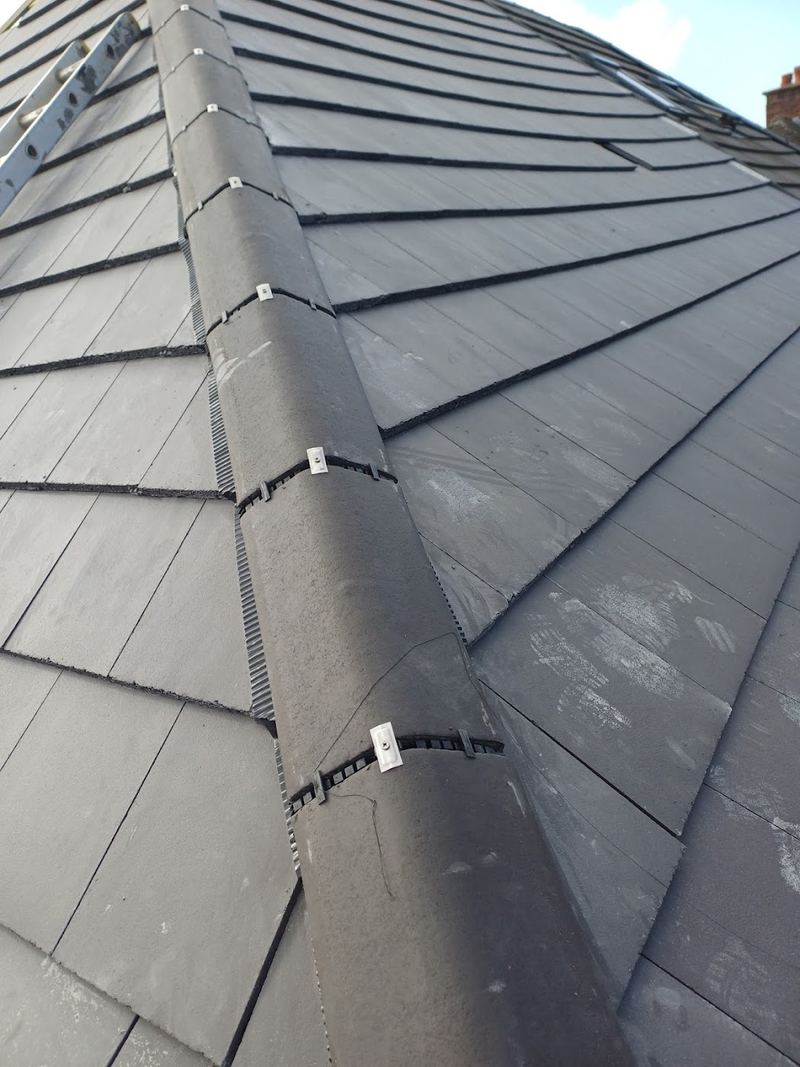
Slate is the longest-lasting covering you can put on a house. One major UK supplier gives a range of 75 to 100 years or more, and the Institute of Historic Building Conservation says a well maintained slate roof should be expected to last 150 years or more.
Quality varies. The same supplier says its standard slate typically lasts 50 years or more while its premium ranges regularly pass 100. So "slate" on a quote is not enough: ask which slate, and what guarantee comes with it.
The trade-off is cost and skill. Slate usually costs noticeably more than tile, and it takes longer to lay well.
Yorkshire stone slate
Much of the older housing around Morley and west Leeds is roofed in thick sandstone slates. A review published by the Institute of Historic Building Conservation notes that these gritstone and sandstone slates are found almost entirely in the areas where they were quarried, including the Pennines and West Yorkshire.
They are heavy, and they are laid in courses that get smaller towards the ridge. The good news is that many stone slates can be lifted, sorted and re-laid, with only the damaged ones replaced. If you have a stone roof, keeping it is usually the right call, and in a conservation area you may have no choice.
Clay and concrete tile
Tiles cover most twentieth-century houses in Leeds, and they are the practical choice for most re-roofs.
BRE, the building research body, reports that manufacturers typically guarantee tiles for 30 years and suggest 60 years as a reasonable service life. It tested aged tiles and found they could last several decades beyond that.
Between the two:
- Concrete costs less and comes in profiles to suit most roofs, including flat slate-look tiles.
- Clay costs more, keeps its colour, and is the right match for the rosemary-tiled houses built between the wars.
Tiles are also easier to repair than slate. One tile can usually be swapped without disturbing its neighbours.
Flat roofs: GRP, EPDM or felt
If the roof is flat, or nearly flat, tiles and slates are out and you are choosing a membrane.
- GRP fibreglass is laid as a liquid over new boards and cures into one seamless skin. One widely used system carries an independent certificate giving it a life of at least 25 years.
- EPDM rubber comes in large sheets, so a small roof may have no joins at all. Suppliers quote long lifespans, though independent figures are harder to find.
- Felt has a poor reputation it does not entirely deserve. Surveyors' guidance puts older felts at about 15 years, but modern high-performance felts at 25 years or more.
Our flat roofing page explains how each one is built up.
Check your roof pitch
Every covering has a minimum slope below which rain can be driven up underneath it. Published figures give a rough guide:
- Natural slate: about 20 degrees, depending on the size of slate and how exposed the house is
- Plain tiles, clay or concrete: usually 30 to 40 degrees
- Interlocking concrete tiles: commonly 15 to 22.5 degrees, with some designed for as low as 12.5
This is why a shallow extension roof often cannot take the same tile as the main house, even if you would like them to match.
Before you set your heart on a material, ask the roofer what the pitch of your roof is and what the manufacturer's minimum is for that product.
The rules when you re-roof
Three sets of rules can apply:
- Building Regulations. If more than half the roof is being re-covered, the roof must be brought up to current insulation standards where feasible, and the work has to be signed off. The National Federation of Roofing Contractors says that means either a contractor registered with a competent person scheme or contacting local authority Building Control before work starts.
- Planning permission. The Planning Portal says re-roofing that does not materially change how the house looks will usually not need it.
- Conservation areas and listed buildings. Leeds City Council lists 80 conservation areas in the district, and normal permitted development rights are restricted in them. Listed buildings need consent for any work that affects their character, and carrying it out without consent is a criminal offence.
If you are in Headingley, Chapel Allerton, Roundhay or one of the older parts of Morley, it is worth a quick check with the council before changing the look of your roof.
So which one?
A few simple rules cover most houses:
- Slate or stone now, and staying put? Replace like for like. It lasts longest and keeps the house in character.
- Tiled now? Stay with tile. Choose clay to match a period house, concrete for value.
- Tempted to switch from slate to tile to save money? Get the structure checked and Building Regulations approval first.
- Flat roof? GRP or EPDM for a long-term fix, on new boards if the old ones are damp.
Costs are a big part of the decision too. Our guide to what a new roof costs sets out what the published UK figures say.
Common questions
What is the longest-lasting roof covering?
Natural slate. Published figures range from 75 to over 100 years, and conservation bodies put a well maintained slate roof at 150 years or more.
Can I replace a slate roof with concrete tiles?
Sometimes, but concrete tiles are usually heavier. The structure may need strengthening, and a covering that adds 15% or more to the weight needs Building Regulations approval.
Do I need planning permission to change my roof covering?
Not usually, if the appearance does not materially change. In a conservation area or on a listed building, check with Leeds City Council before any work.
Is GRP or EPDM better for a flat roof?
Both are long-lasting when fitted properly. GRP suits small roofs with awkward details, and EPDM suits simple shapes that can be covered in one sheet.
Want a roofer to look at yours?
Quotes are free and there is no obligation. Tell Scott what you have noticed and he will book a time to take a look.